









Rabat
The 2025 Africa Cup of Nations (AFCON), staged in Morocco from 21 December 2025 to 18 January 2026, has already been hailed as one of the most successful and tightly managed editions in the tournament’s long history. According to Le Monde, the French daily, the competition unfolded across six Moroccan cities without major incidents, a testament to the country’s reputation for effective security management at large-scale sporting events. With more than fifty matches played and millions of fans engaged, Morocco demonstrated not only its ability to host Africa’s premier football competition but also its readiness to welcome the world in 2030, when it will co-host the FIFA World Cup.
From the outset, AFCON 2025 was marked by meticulous planning and flawless execution. Stadiums in Rabat, Casablanca, Tangier, Marrakech, Fez, and Agadir operated at full capacity, with crowds filling the stands in unprecedented numbers. Morocco’s national team’s advance to the final only heightened the excitement, driving attendance to historic levels. Fan zones spilled beyond their designated boundaries as supporters from across Africa and beyond flocked to the kingdom, creating a vibrant atmosphere that extended well beyond the stadium walls.
This extraordinary turnout was matched by commercial success. Sponsorship deals reached record highs, broadcasting rights expanded globally, and the Confederation of African Football (CAF) reported visibility metrics that surpassed all previous editions. For Morocco, this was more than a sporting triumph—it was a demonstration of its rising status as a trusted, modern, and internationally appealing host nation.
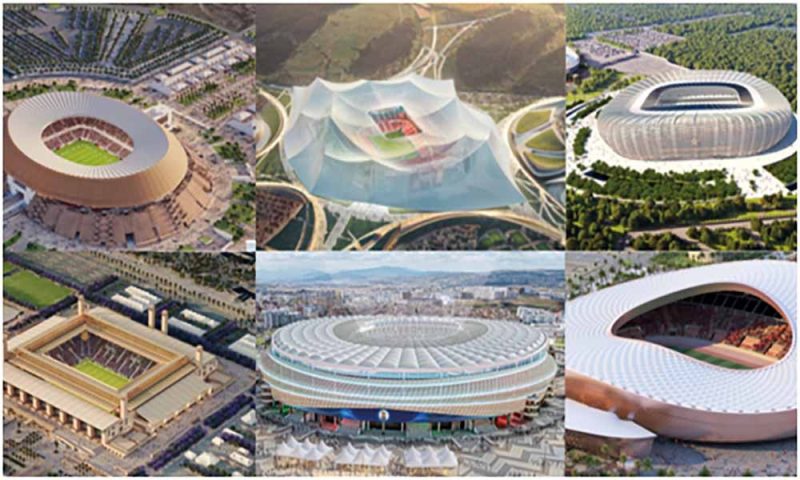
Central to the tournament’s success were Morocco’s world-class stadiums. The Prince Moulay Abdallah Stadium in Rabat, along with venues in other host cities, drew praise for their immaculate pitches, advanced broadcasting technology, and efficient crowd management systems. These facilities operated with a precision that matched global standards, reinforcing Morocco’s claim to be ready for the logistical and technical demands of the World Cup.
At the heart of Morocco’s long-term football strategy lies the Grand Stade de Casablanca, an ambitious project set to become the largest football stadium in the world. Designed as a futuristic landmark, the stadium is intended not only to anchor Morocco’s hosting duties in 2030 but also to elevate the country’s sporting presence internationally. Its sheer scale and symbolic importance have already sparked discussions about whether it should host the World Cup final, a possibility that would place Morocco firmly at the center of global football.
Beyond Casablanca, Morocco is investing heavily in stadium modernization to align with FIFA’s highest standards. In Fez, upgrades are underway to expand capacity, improve pitch quality, and modernize media infrastructure. Agadir is enhancing its spectator areas and transport links, while Marrakech is undergoing both technical and architectural improvements to increase its suitability for international tournaments. Together, these projects form a compact network of elite venues designed to minimize travel time for teams and fans—a logistical advantage that dovetails with FIFA’s sustainability priorities.
This modernization drive reflects a broader national policy, spearheaded by King Mohammed VI, who has made football a central pillar of Morocco’s influence strategy. By investing in infrastructure and positioning the sport as a vehicle for international prestige, Morocco is not only preparing for the World Cup but also strengthening its role as a leader in African and global football.
The AFCON also served as a comprehensive test of Morocco’s wider infrastructure. High-speed rail networks, upgraded highways, and expanded airport facilities absorbed dramatic increases in traffic with minimal delays. Hotels and restaurants across multiple cities reported some of their strongest occupancy rates in years, underscoring the country’s ability to handle surges in tourism comparable to those expected during the World Cup. The hospitality sector, long a cornerstone of Morocco’s economy, proved capable of scaling up to meet the demands of international visitors.
Security operations blended cutting-edge technology with on-the-ground expertise, ensuring safe and orderly movement of fans and teams throughout the tournament. The absence of major incidents across fifty matches highlighted Morocco’s ability to balance openness and celebration with rigorous safety protocols—a critical factor for FIFA when assessing host nations.
For the Confederation of African Football, Morocco’s performance delivered a powerful message: African football can stage major events at a level that meets, and in several areas exceeds, global standards. AFCON 2025 was not just a continental competition; it was a showcase of Africa’s capacity to host events that rival those in Europe, South America, or Asia. Morocco’s success reinforced the idea that the 2030 World Cup, shared with Spain and Portugal, will be a truly global celebration with Africa playing a central role.
As Morocco looks toward 2030, the lessons of AFCON 2025 will serve as a blueprint. The tournament revealed the country’s operational control, commercial strength, and infrastructural readiness. It demonstrated how football can be leveraged as a tool of diplomacy, tourism, and national pride. Most importantly, it showed that Morocco is prepared not just to host matches but to create an unforgettable experience for players, fans, and sponsors alike.
The Grand Stade de Casablanca, the modernization of venues across the kingdom, and the seamless integration of transport and hospitality networks all point to a nation determined to seize its moment on the world stage. AFCON 2025 was more than a sporting event—it was a rehearsal, a statement, and a promise. When the world arrives in 2030, Morocco will be ready. (PERSISMA/Ed)